
Louis Armstrong’s Highland Park Tape Becomes a 12-Track Live Album
A concert recorded by a high school stage manager in 1957 has become a Louis Armstrong live album. One Night in Highland Park arrived on November 13 through Verve Records, giving the March 19 performance its first release. Armstrong and His All Stars had played for about 1,200 people at Highland Park High School in Illinois.
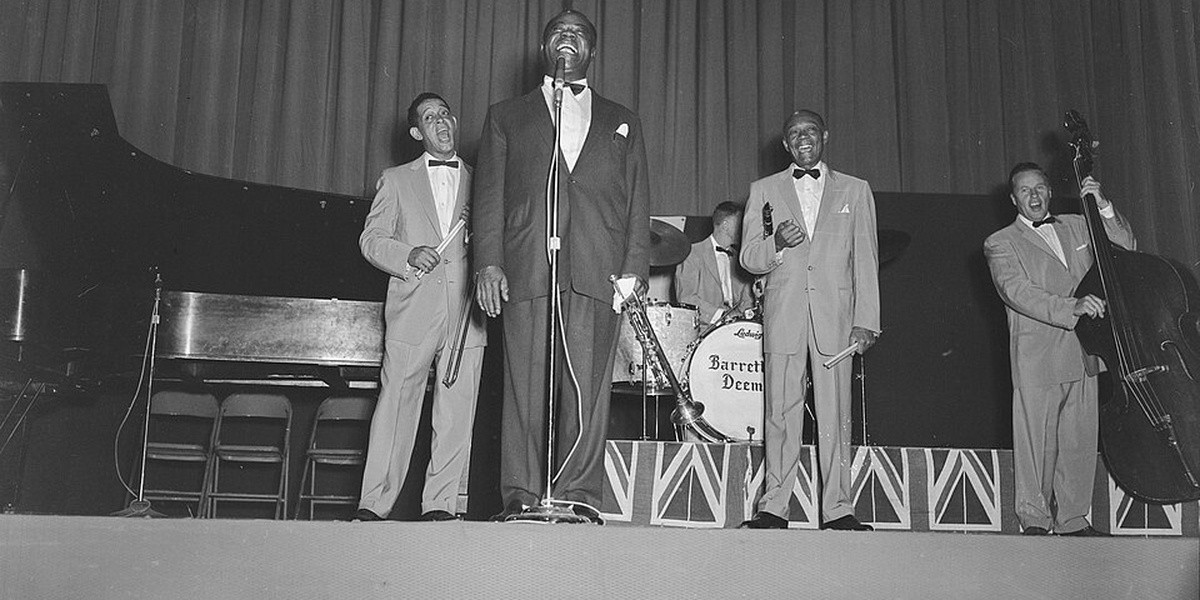
Joel Goldstein, the student working on the show, recorded it using two Telefunken microphones suspended from a batten and an Ampex reel-to-reel machine. He kept the tape. The new album credits Kevin Reeves with transferring, mixing and mastering the recording, and Armstrong biographer Ricky Riccardi wrote the liner notes. The work of preserving a source in 1957 and preparing it for listeners in 2026 happened at opposite ends of a gap of more than 69 years.
The group on that recording is Armstrong on trumpet and vocals, with Trummy Young on trombone and Edmond Hall on clarinet. Billy Kyle plays piano, Squire Gersh bass and Barrett Deems drums. The names matter for a release marketed under Armstrong’s name. They identify which version of the All Stars a listener will hear across the twelve selections, rather than leaving the band as a generic credit.
How the twelve tracks fit on a record
- Side A runs for about 22 minutes across five tracks, beginning with ‘When It’s Sleepy Time Down South’ and ending with ‘High Society Calypso’.
- Side B runs for a little over 25 minutes across seven tracks. It opens with ‘Blueberry Hill’, places ‘Mack the Knife’ fourth on the side and closes with ‘The Star-Spangled Banner’.
Those timings add up to approximately 47 minutes and 25 seconds, based on the individual track lengths. That is a duration for the released music, not a claim about the total length of the evening. The CD lists the same twelve titles in sequence, so the move from calypso to ‘Blueberry Hill’ can also be heard without turning over a record.
The order offers a way into the set. ‘High Society Calypso’ links the first side to Armstrong’s film work, while the second moves from a popular song through material associated with New Orleans jazz and a contemporary hit before the closing anthem. A playlist made only from the best-known song titles would miss those changes of pace. The attraction of the release is the chance to hear these particular musicians in a sequence assembled from one school concert, with the provenance of the tape documented alongside it.